Treatment for Central Auditory Processing Disorder in Adults

Treatment for central auditory processing disorder in adults combines auditory training, compensatory strategies, environmental changes, and assistive technology. Central auditory processing disorder (CAPD) means the ears hear normally while the brain struggles to make sense of sound. Here is what to know about CAPD: what it is, how audiologists diagnose it, which approaches carry the strongest evidence, and the strategies that help every day.
If following conversations in noisy places is a constant struggle for you or someone you love, it isn't just you, and there's real help for it. Many adults spend years being told nothing is wrong. The right support can make everyday communication far less tiring.
Key Takeaways:
Central auditory processing disorder (CAPD) changes how the brain processes sound, even when hearing is normal. Adults with CAPD often miss pieces of conversation in background noise.
An audiologist diagnoses APD using specific auditory processing tests. A speech-language pathologist then treats the communication side of the condition.
Four approaches work together: auditory training, compensatory strategies, environmental changes, and assistive technology. A 2024 review found personal remote microphone systems carry the most consistent evidence.
Practical coping strategies, from note-taking to managing noise, make daily communication easier. Small changes pay off quickly.
What Is Central Auditory Processing Disorder?
How CAPD in Adults Affects Daily Life
How Do Audiologists Diagnose Auditory Processing Disorder?
Treatment Options for Adults with CAPD
Coping Strategies for Those with CAPD
What We See Working with Clients
What Is Central Auditory Processing Disorder?

Auditory processing disorder (APD) is a condition where the brain has difficulty interpreting sound. It is also called central auditory processing disorder (CAPD). The ears detect sound correctly, but the central auditory nervous system struggles to process auditory information.
Common signs include trouble understanding speech in background noise, keeping up with rapid speech, and distinguishing similar sounds. Some adults also report trouble recognizing where a sound comes from, remembering spoken details, or building the listening skills that carry a conversation.
People with APD hear sounds at normal volume and often show normal hearing on standard hearing tests, because the ear canal works. The difference is in how the brain processes sound.
From the outside, APD symptoms can mimic hearing loss. The condition is often identified in children, and many adults have carried an undiagnosed processing disorder since childhood.
How CAPD in Adults Affects Daily Life

CAPD in adults can make work, family time, and social settings draining. Meetings and phone calls in noisy settings are hard to follow, and even relaxed family chats can need repeated explanations.
Those listening demands add up to mental exhaustion after long conversations. Many adults with auditory processing disorder describe stress, frustration, and self-doubt, and some withdraw from social plans. Coworkers can misread the difficulty as inattention or forgetfulness.
CAPD often goes undiagnosed in adults because normal hearing on a routine test hides it. Without a proper evaluation of auditory processing skills, the pattern gets mislabeled as a hearing problem or a quirk. Naming the condition opens the door to auditory processing disorder treatment that fits.

Auditory Processing Delay in Adults
Check out our blog on auditory processing delay in adults for more information!
How Do Audiologists Diagnose Auditory Processing Disorder?
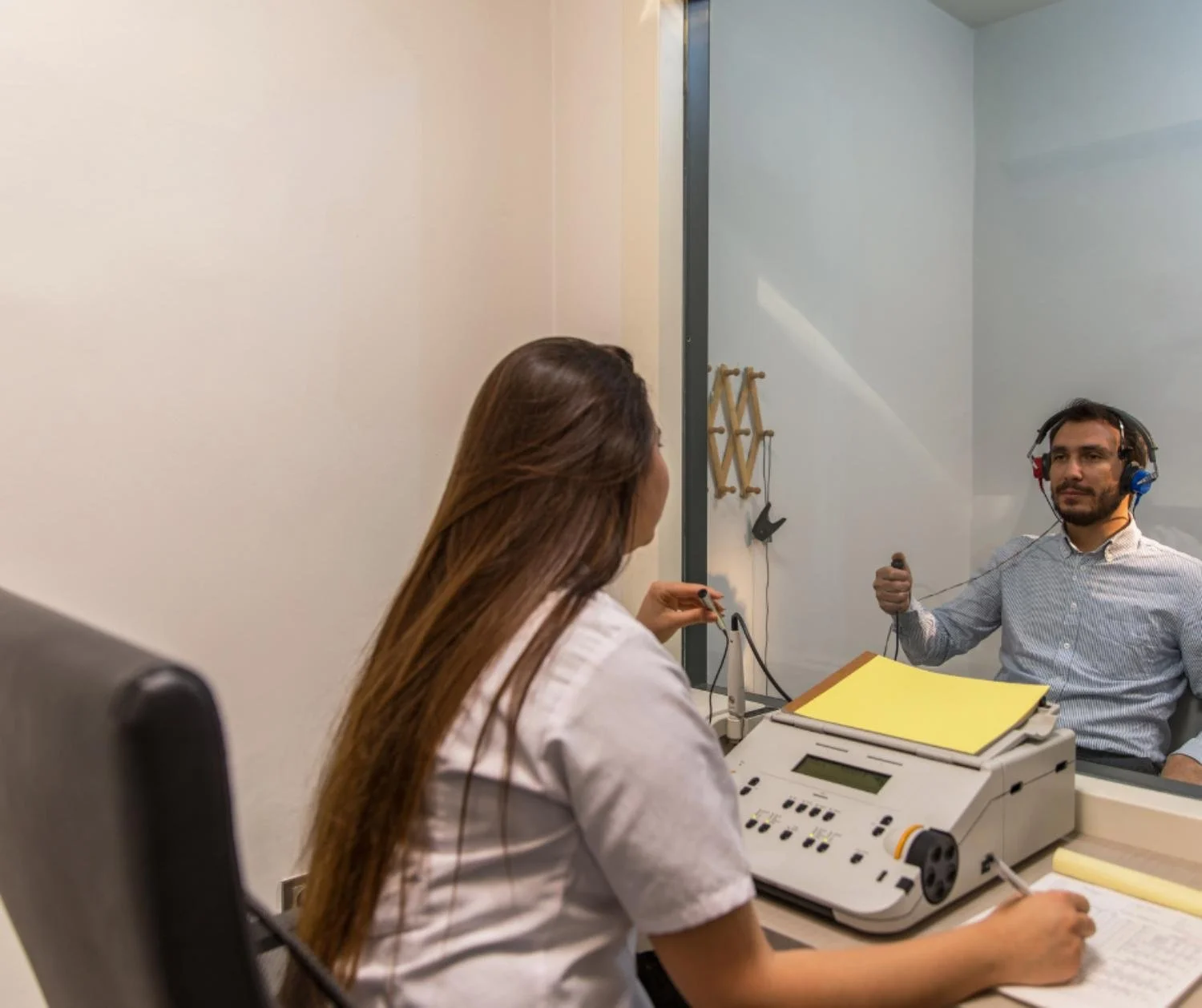
An audiologist conducts specific auditory processing tests for diagnosis. Tests may include assessments of frequency and duration patterns.
APD can often go undiagnosed until adulthood due to symptom overlap. Adults with suspected auditory processing disorder often spend years mistaking their symptoms for ADHD, hearing loss, or memory decline. Testing is how you diagnose auditory processing disorder and rule out the look-alikes. School screenings focus on children, so adults most often slip through.
Speech-language pathologists work alongside audiologists during diagnosis. The audiologist confirms the condition, and the therapist addresses the communication problems that accompany it.
If those struggles are already affecting your job or relationships, online speech therapy for adults can begin while testing continues.
Treatment Options for Adults with CAPD
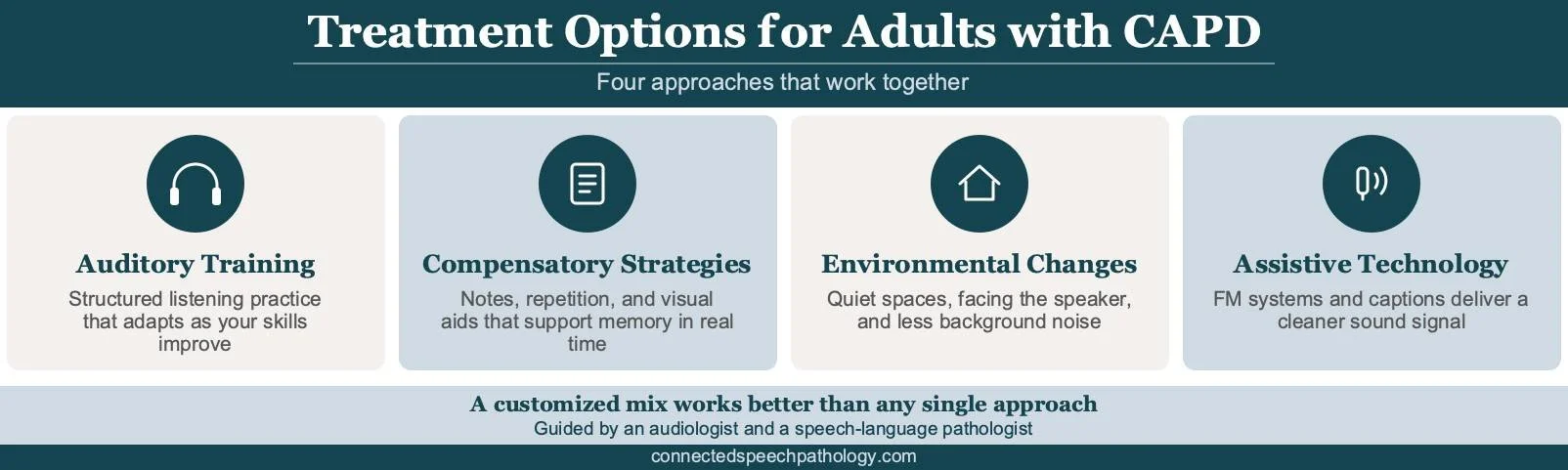
Treatment options for adults with CAPD combine auditory training, compensatory strategies, environmental modifications, and assistive technology. Effective treatment focuses on the listening demands you face most: work, home, and the phone.
A 2024 systematic review in Frontiers in Human Neuroscience by Crum and colleagues covered 13 studies. It found the most consistent evidence of benefit for personal remote microphone systems. Training alone has shown mixed results, so combining several approaches usually works better than relying on any single one.
Auditory Training
Auditory training uses structured practice to strengthen the brain's processing of auditory signals. Programs, such as LACE (Listening and Communication Enhancement), replay speech in background noise and faster talk.
The drills adapt as your auditory skills improve, building the brain's ability to keep up. A speech-language pathologist picks and paces the exercises, adding auditory discrimination work.
Compensatory Strategies
Everyday workarounds help you manage listening difficulties in real time. Useful habits include:
Taking notes during meetings or long calls
Asking for repetition without embarrassment
Breaking multi-step directions into written checklists
Using visual aids, such as agendas or slides, to reinforce auditory information
These habits shore up auditory memory while the training work continues.
Environmental Modifications
Environmental modifications shrink the listening load before a conversation starts. Facing the speaker, choosing quiet corners over loud environments, and turning down competing sound can significantly improve speech perception. Small environmental adjustments cost nothing and start working right away.
Assistive Technology
Assistive technology provides the brain with a cleaner sound signal, which directly supports those with poor auditory processing. Personal FM systems send the speaker's voice straight to your ears and enhance clarity in noisy environments. Speech-to-text apps convert spoken information into captions, and your therapist can incorporate these tools into a plan that works in real-world settings.
How Speech Therapy for CAPD Works in Practice
Speech therapy for CAPD starts by mapping your specific auditory processing skills, then builds practice to improve communication where it breaks down. Most adult therapy focuses on practical strategies rather than repetitive exercises. That can mean learning to ask a fast talker to slow down or repeat, setting yourself up to hear better in noisy rooms, and using supports like captions or a personal listening device. Some sessions also practice following speech against background noise and strengthening your ability to hold on to what you've just heard.
Progress shows up as smaller frustrations: fewer requests for repetition, easier phone calls, and more confidence during work meetings. Over time, processing auditory information takes less effort.
Coping Strategies for Those with CAPD
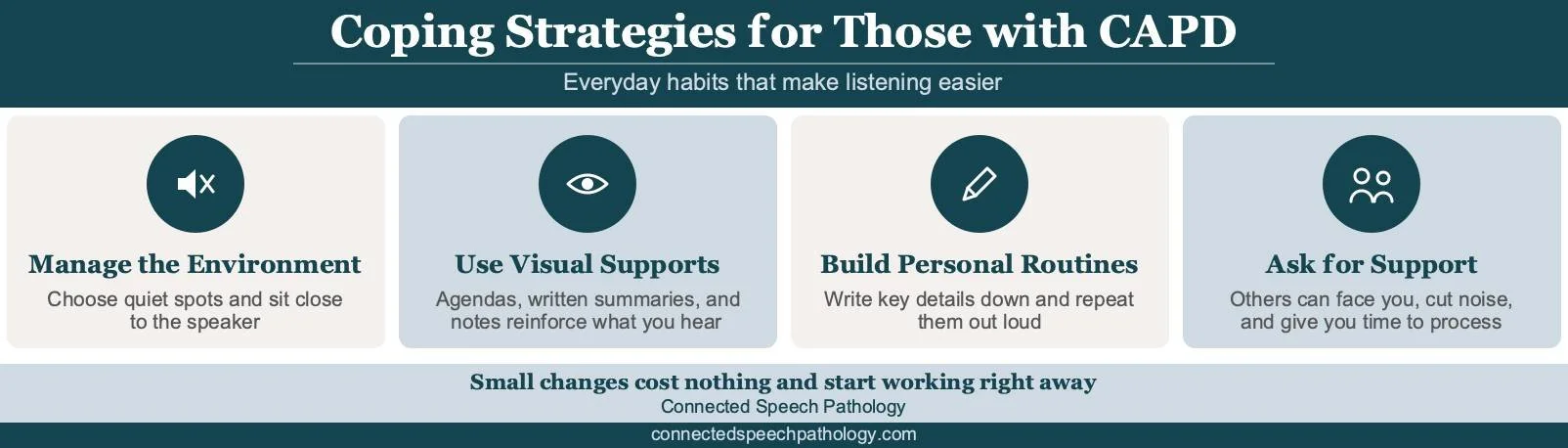
Coping strategies make daily life with auditory processing disorder less exhausting. Choose quiet spots for important conversations, sit close to the speaker, and ask for an agenda or written summaries to improve focus before the conversation starts.
Support your working memory too. Writing key details down, repeating them out loud, and keeping instructions in writing all reinforce what you hear. Simple habits like asking someone to clarify or repeat what they said make conversations easier for everyone.
Friends, family, and coworkers can help by facing you when they speak, cutting background noise, and giving you a moment to process. Asking plainly for what helps can reduce frustration on both sides.
What We See Working with Clients

We work with adults at every stage, from those just beginning auditory processing testing to those diagnosed years ago as children. The examples below are real clients of ours. Identifying details have been changed to protect privacy.
One client, a project manager in her forties, passed every hearing test but still lost the thread on video calls whenever there was background noise. She replayed meeting recordings at night to catch what she missed.
In sessions, she practiced pulling key points out of recorded meeting audio, paraphrasing decisions back, and requesting agendas early. She still asks for the occasional repeat, but meetings no longer leave her drained by the end of the day.
Another client, a retired teacher in his sixties, had struggled for years to follow conversation in restaurants, where voices blurred together. His hearing always tested normal, but family dinners had become events he dreaded.
His sessions focused on telling similar sounds apart in word pairs, following conversation over recorded background noise, and planning where to sit to keep faces in view. Dinners still take effort, but he no longer leaves them exhausted.
Frequently Asked Questions About CAPD

1. Are auditory processing disorders curable?
No cure exists, yet auditory processing disorders respond well to management. Many adults learn strategies for complex listening situations. Their auditory processing skills improve as the brain adapts to guided practice.
2. What are the triggers for auditory processing disorder?
Noisy environments, fatigue, stress, and fast or unclear speech all make APD symptoms worse. Auditory processing disorder in adults can be lifelong or can follow head injuries, multiple sclerosis, or stroke. Some adults also live with attention deficit hyperactivity disorder, autism spectrum disorder, or learning differences alongside it.
3. What speech therapy is used for auditory processing disorder?
Speech therapy built around structured listening training is the most common approach for APD. A speech-language pathologist runs targeted exercises and teaches practical strategies. Sessions often add assistive technology, such as personal FM systems or captioning tools.
4. Does auditory processing disorder in adults get worse with age?
Auditory processing often declines with age, so symptoms can grow more noticeable over time. Aging changes how the central auditory nervous system handles sound, which is one reason APD affects older adults so often. Children sometimes outgrow part of the difficulty; adults gain more from strategies and tools.
5. Is there a medication for auditory processing disorder?
No medication is approved to treat auditory processing disorder (APD). Auditory processing disorder treatment is behavioral, guided by an audiologist and a speech-language pathologist. If attention issues occur alongside it, ask a prescribing provider whether those need separate care.
How Connected Speech Pathology Can Help

Connected Speech Pathology offers specialized support for adults with CAPD. Our licensed speech-language pathologists understand auditory processing deficits and build care around your history, your goals, and any APD test results you bring.
We blend auditory training with strategies and technology tailored to your unique challenges, adjusting as your needs change. Sessions are held online, so support fits around work and family. We also coach the people around you, so it gets easier to follow conversations anywhere.
If listening difficulty shapes your whole day, our team is ready to help.
Summary
Improvement is possible at any age. Treatment for central auditory processing disorder in adults works best as a mix. Auditory training, everyday strategies, quieter spaces, and personal remote microphone systems each play a part.
An audiologist confirms the diagnosis, and a speech-language pathologist builds the plan. Step by step, trouble understanding speech becomes something you can manage with confidence.

About the Author
Allison Geller, M.A., CCC-SLP, is a communication coach, speech-language pathologist, and founder of Connected Speech Pathology, an international online practice providing professional communication coaching and speech therapy for children, teens, and adults. With more than two decades of experience, she has worked in medical and educational settings and published research on aphasia. Today, she leads a team of specialists who help clients improve their skills in public speaking, vocal presence, accent clarity, articulation, language, fluency, and interpersonal communication.